


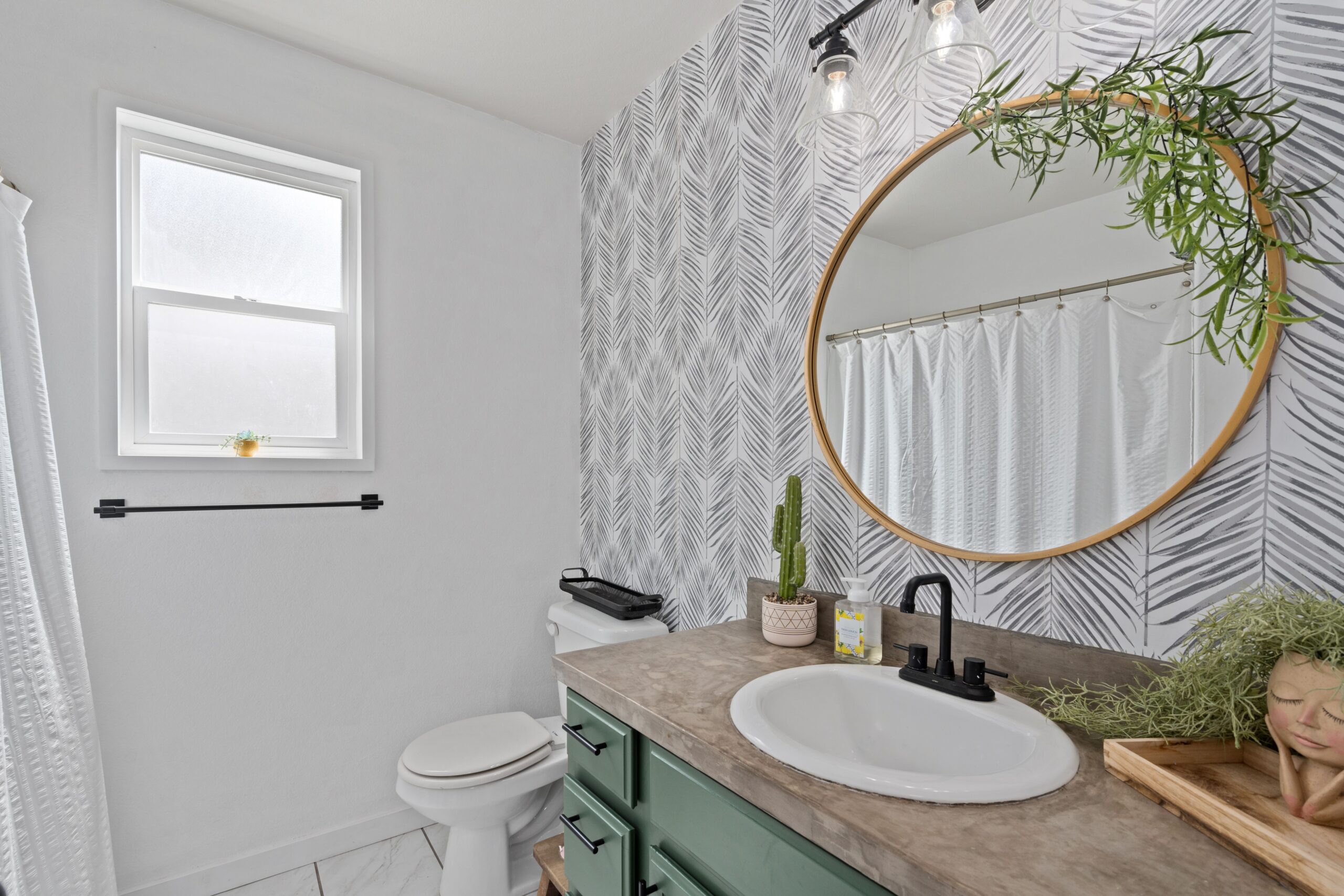
Bathrooms are the number-one request we get from home-décor buyers, and also the number-one source of returns when spec’d wrong. The rule is simple: dry areas only.
Where they work great
Real room examples help here; see how these rules apply in a set of bathroom peel and stick tile ideas.
- Vanity backsplashes and the wall behind the sink (away from direct spray)
- Full wall cladding in powder rooms
- Accent walls and wainscoting
Where to pause
Inside the shower, around the tub rim, and on shower floors, standing water defeats even premium adhesive. For those zones, specify a traditional waterproof system or our PVC-click line instead.
Material matters
For humid rooms choose a vinyl-core tile with a sealed print layer. Our bathroom-grade SKUs add a UV-stable top coat so the pattern won’t yellow under bathroom lighting.
Buyer checklist: Confirm the room’s humidity, confirm “dry area” with the end customer in writing, and choose sealed-topcoat vinyl cores for any bathroom spec.
Frequently Asked Questions
Can peel and stick tiles be used in bathrooms?
Yes, but only in dry areas: vanity backsplashes, the wall behind the sink away from direct spray, full wall cladding in powder rooms, and accent walls or wainscoting.
Can peel and stick tiles go inside a shower?
No. Standing water inside the shower, around the tub rim, and on shower floors defeats even premium adhesive. For those zones, specify a traditional waterproof system or a PVC-click line instead.
What material should I choose for humid bathrooms?
A vinyl-core tile with a sealed print layer. Bathroom-grade SKUs add a UV-stable top coat so the pattern won’t yellow under bathroom lighting.
How can buyers avoid bathroom tile returns?
Confirm the room’s humidity, confirm "dry area" placement with the end customer in writing, and choose sealed-topcoat vinyl cores for any bathroom specification.